Homogenization for Cell Disruption: Essential for Biotech & Lab Applications
In biotechnology and life science laboratories, accessing what’s inside a cell is often the first step toward discovery. Proteins, enzymes, DNA, RNA, and other intracellular compounds must be released efficiently without damaging their structure or activity. High-pressure homogenization has become one of the most reliable and scalable methods for cell disruption, offering researchers and manufacturers a controlled way to break cells while preserving valuable biological materials. Cell disruption is critical in applications such as recombinant protein production, vaccine development, enzyme extraction, and metabolite analysis. Traditional methods like chemical lysis, sonication, or bead milling can be limited by heat generation, contamination risk, or poor scalability. Homogenization, by contrast, uses mechanical forces rather than chemicals, making it cleaner, more reproducible, and suitable for both laboratory research and industrial bioprocessing.
The science behind homogenization-based cell disruption lies in intense mechanical forces. When a cell suspension passes through a narrow homogenizing valve at high pressure, it experiences sudden pressure drop, shear stress, turbulence, and cavitation. These combined forces rupture cell walls and membranes effectively. Whether working with bacteria, yeast, algae, or certain mammalian cells, this physical mechanism provides consistent breakage performance across a wide range of organisms. One of the biggest advantages for biotech labs is process control. Pressure levels, flow rate, and number of passes can be adjusted depending on cell type and desired disruption level. Gentle settings may release soluble proteins while keeping subcellular structures intact, while higher pressures can ensure complete lysis. This flexibility allows researchers to tailor conditions to sensitive biomolecules, reducing the risk of denaturation.
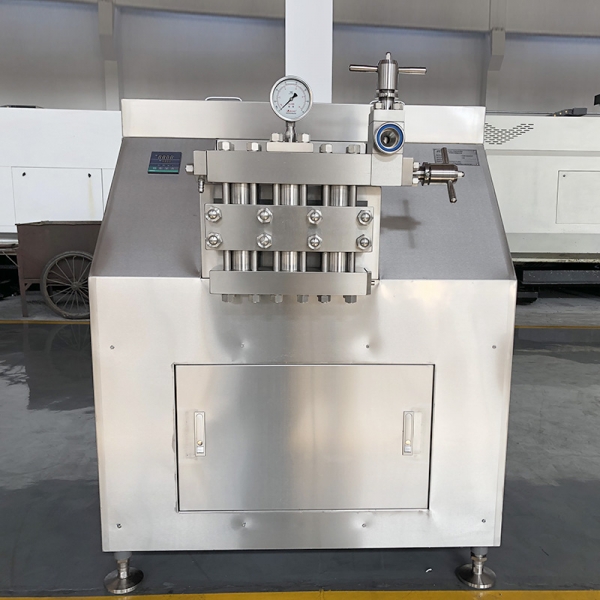
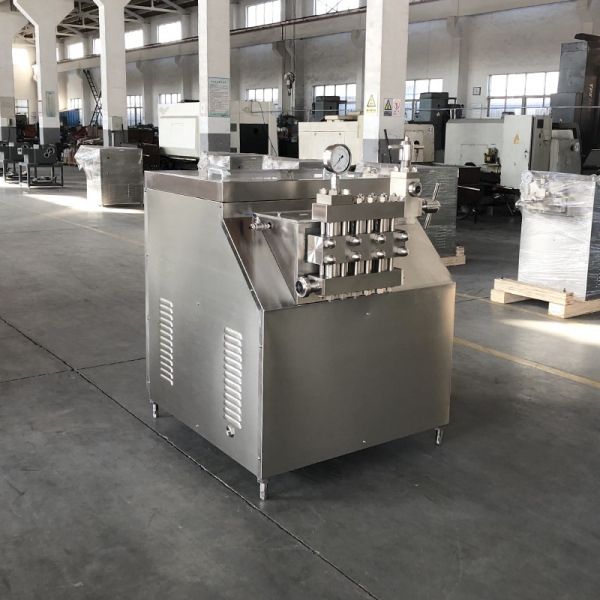
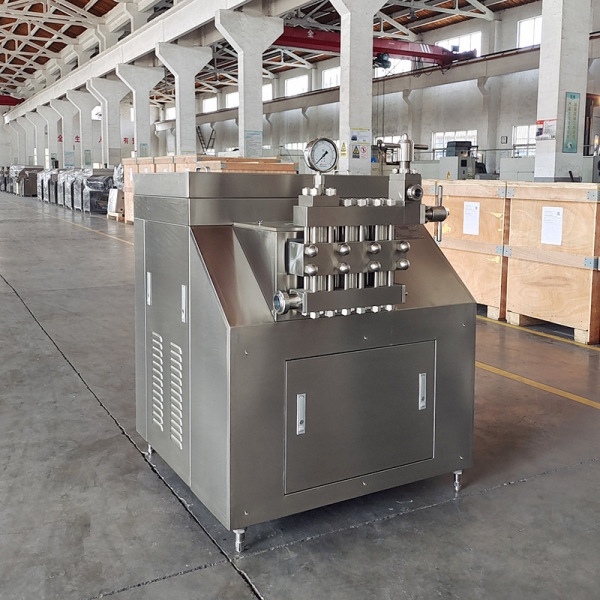
Temperature management is another crucial factor. Excessive heat during disruption can degrade proteins and enzymes. Modern high-pressure homogenizers are designed for efficient heat control and can be integrated with cooling systems to maintain sample integrity. This makes the method especially suitable for temperature-sensitive biologics and pharmaceutical research. Scalability is where homogenization truly stands out. A process optimized in a laboratory-scale homogenizer can be transferred to pilot and industrial systems with predictable performance. For biotech companies moving from research to commercial production, this continuity shortens development time and lowers technical risk. Equipment like Chaoli high-pressure homogenizers supports this transition with stable pressure output and reliable flow characteristics.
Contamination control is equally important in life science environments. Homogenization systems designed with sanitary materials and easy-clean structures help meet laboratory and pharmaceutical hygiene standards. The closed processing design also reduces operator exposure and sample contamination compared to open mechanical disruption methods. Efficiency is another benefit. Homogenization provides rapid cell breakage in continuous flow, allowing large sample volumes to be processed in less time. This improves laboratory productivity and supports high-throughput research. In industrial biotech, faster processing directly translates into higher production capacity and lower cost per batch.
In modern biotech and laboratory applications, cell disruption is not just a step in the workflow—it is a determinant of yield, quality, and overall process success. High-pressure homogenization delivers the precision, scalability, and reliability required to unlock valuable intracellular materials. From research benches to large-scale biomanufacturing, it remains an essential technology powering advances in biotechnology and life sciences.