High-Pressure vs. Low-Pressure Homogenizers – What’s the Difference and Which Is Right for You?
Homogenization plays a critical role in many industries, from food and beverages to pharmaceuticals, cosmetics, and biotechnology. While the goal is always to create a uniform and stable product, not all homogenizers work in the same way. The choice between high-pressure and low-pressure homogenizers can significantly affect product quality, process efficiency, and operating costs. Understanding their differences helps manufacturers select the right solution for their specific application. Low-pressure homogenizers typically operate at relatively modest pressures and are often used for basic mixing and coarse emulsification. They are suitable for applications where particle size reduction requirements are not strict and where product stability is less demanding. In some food and chemical processes, low-pressure systems are used to blend ingredients evenly or prevent quick separation, but they may struggle to achieve long-term stability or ultra-fine particle distribution.
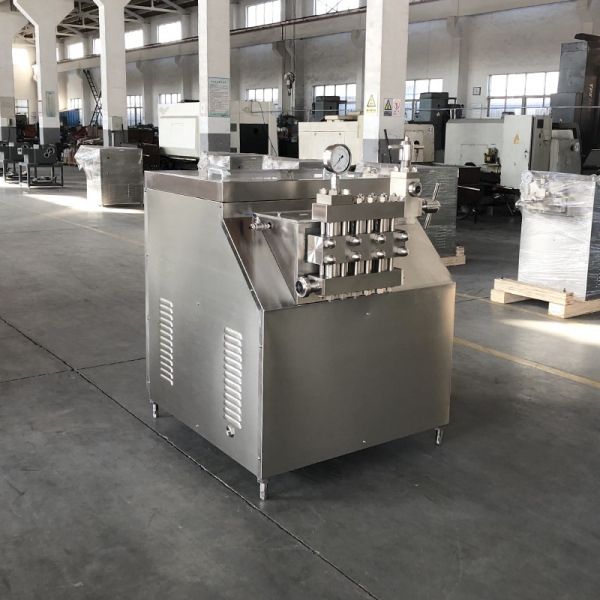
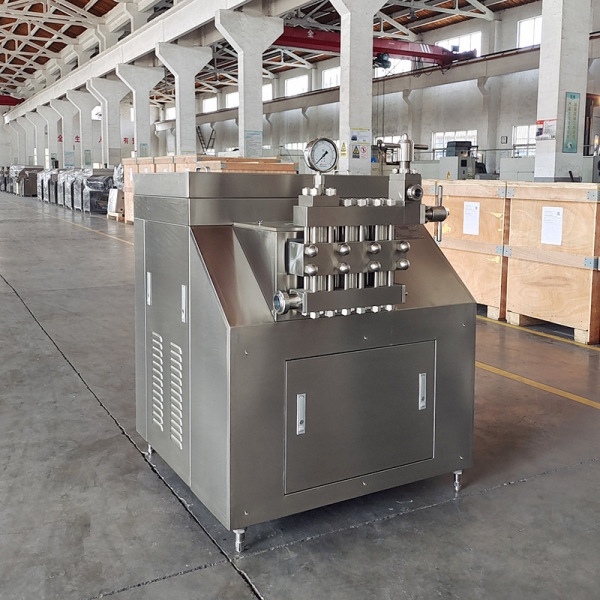
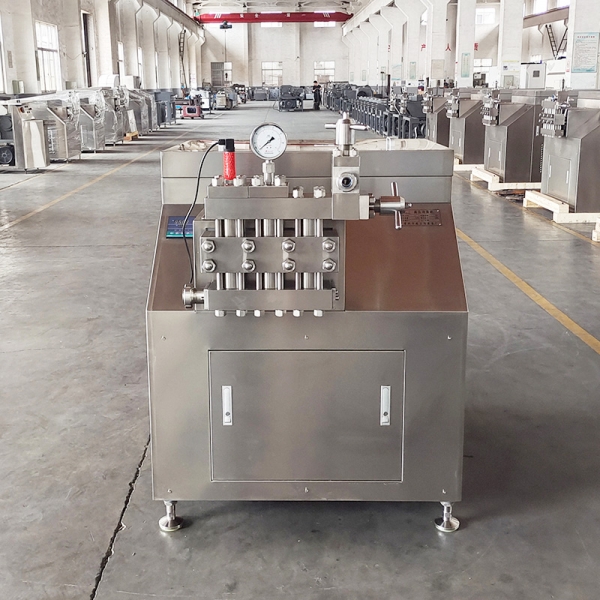
High-pressure homogenizers, on the other hand, are designed to deliver intense mechanical energy through high operating pressures. As the product passes through a specially engineered homogenizing valve, it experiences strong shear forces, turbulence, and cavitation. These forces dramatically reduce particle and droplet size, creating highly uniform emulsions and dispersions. This makes high-pressure homogenizers ideal for applications where consistency, texture, and stability are critical. One of the most noticeable differences between the two systems is product quality. High-pressure homogenization produces finer particle sizes, which improves mouthfeel in beverages, enhances bioavailability in pharmaceutical and nutraceutical products, and ensures smooth textures in cosmetics. Low-pressure homogenizers often cannot achieve the same level of refinement, which may result in separation over time or inconsistent performance.
Process flexibility is another key factor. High-pressure homogenizers allow precise control over pressure, flow rate, and processing cycles. This makes them suitable for a wide range of formulations and allows manufacturers to fine-tune processes as products evolve. Low-pressure systems are generally simpler but offer less control, which can limit their use in advanced or high-value applications. Scalability is especially important for growing businesses. High-pressure homogenizers are widely used in both laboratory and industrial environments, making it easier to scale a process from R&D to mass production. Once parameters are optimized at a smaller scale, they can be transferred to larger systems with predictable results. Low-pressure homogenizers may work well at small volumes but can present challenges when scaling up while maintaining product consistency.
From a cost perspective, low-pressure homogenizers often have a lower initial investment and simpler maintenance requirements. However, high-pressure homogenizers can deliver better long-term value by reducing reprocessing, minimizing product waste, and improving yield. Their durability and efficiency make them a smart choice for manufacturers focused on quality and long-term operational performance. Choosing the right homogenizer ultimately depends on your industry, product requirements, and production goals. If your process demands fine particle size, long-term stability, and consistent high-quality results, a high-pressure homogenizer is the better option. For simpler blending tasks with less demanding specifications, a low-pressure system may be sufficient. By carefully evaluating your application needs, you can select the homogenization technology that best supports your product success.