Preventing Blockages and Flow Interruptions in Homogenizers
High-pressure homogenizers are essential processing equipment in industries such as food and beverages, pharmaceuticals, cosmetics, biologics, chemicals, and nano-material production. Their ability to operate continuously under high pressure makes them ideal for producing stable emulsions, fine dispersions, and uniform suspensions. However, blockages and flow interruptions can reduce efficiency, affect product quality, and increase maintenance costs. Preventing these issues is essential for maintaining reliable and productive operations. One of the most common causes of flow interruptions is poor raw material preparation. Large particles, undissolved powders, or foreign contaminants can enter the homogenization system and obstruct pipelines, valves, or pump components. Proper filtration, sieving, and pre-mixing before processing help eliminate unwanted materials and ensure that the product enters the homogenizer in a suitable condition for smooth operation.
Product viscosity is another major factor that influences flow performance. Thick formulations require more force to pass through the homogenizing valve, increasing the possibility of restricted flow if operating parameters are not properly adjusted. Manufacturers should optimize pressure, temperature, and flow rate according to the product characteristics to maintain stable processing and reduce unnecessary stress on the equipment. Maintaining a continuous and steady product feed is equally important. An inconsistent feed supply can introduce air into the system, create pressure fluctuations, and interrupt the homogenization process. Properly designed feed tanks and transfer systems help maintain a constant product level, ensuring stable pressure and uninterrupted production throughout the operating cycle.
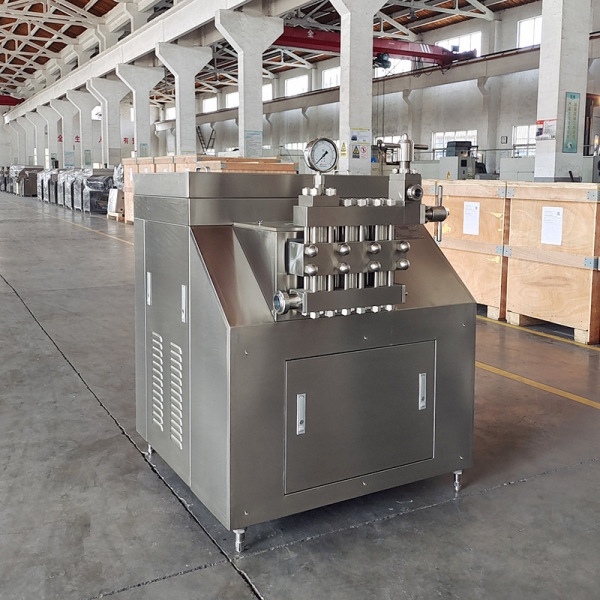
The homogenizing valve is the heart of the machine and deserves regular attention. Because it is exposed to high pressure and continuous product flow, residues or wear can gradually reduce its efficiency. Routine inspection, cleaning, and timely replacement of worn valve components help maintain consistent pressure, prevent blockages, and ensure high-quality homogenization results. Temperature control also contributes significantly to smooth product flow. Certain materials become thicker or begin to solidify when temperatures decrease, making them more difficult to process. Maintaining an appropriate processing temperature improves flow characteristics while protecting heat-sensitive ingredients. A balanced temperature management strategy enhances both product quality and equipment performance.
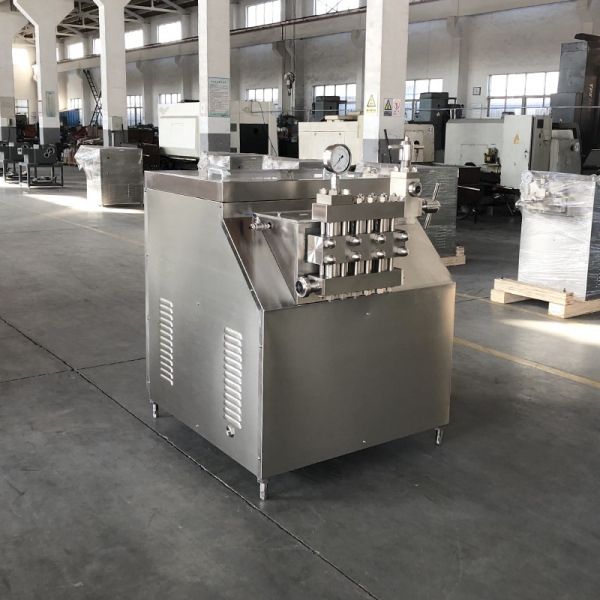
Routine cleaning is one of the most effective ways to prevent blockages. Product residues left inside pipelines, pump heads, or homogenizing valves can dry or harden after production, creating restrictions during future processing. Cleaning-In-Place (CIP) systems or thorough manual cleaning procedures remove residues efficiently, helping maintain hygienic conditions and uninterrupted operation. Monitoring operating conditions during production allows manufacturers to detect potential problems before they become serious. Changes in pressure readings, unexpected drops in flow rate, unusual vibration, or abnormal operating noise often indicate developing blockages or component wear. Continuous monitoring enables operators to take corrective action quickly, minimizing downtime and preventing costly production losses.
Choosing the right homogenizer for the application is another important preventive measure. Equipment should be selected based on production capacity, product viscosity, particle characteristics, and required pressure range. A homogenizer that matches the processing requirements is less likely to experience excessive stress or frequent flow interruptions during long production runs. Preventive maintenance should be performed according to a planned schedule rather than waiting for equipment failure. Regular inspection of seals, plungers, valves, bearings, and pipelines helps identify wear before it affects machine performance. Replacing worn components at the appropriate time reduces unexpected downtime, extends equipment life, and improves overall production reliability.
Operator knowledge also plays a critical role in preventing operational issues. Well-trained personnel understand correct startup procedures, pressure adjustment methods, cleaning requirements, and daily inspection routines. Their ability to recognize early warning signs and respond promptly helps maintain stable operation while protecting both equipment and product quality. Preventing blockages and flow interruptions requires a combination of proper material preparation, optimized processing conditions, routine cleaning, preventive maintenance, and skilled operation. By implementing these best practices, manufacturers can maximize equipment efficiency, reduce production interruptions, lower maintenance costs, and ensure consistent product quality. For companies seeking reliable long-term performance, proactive homogenizer management is the key to achieving stable, efficient, and cost-effective production.