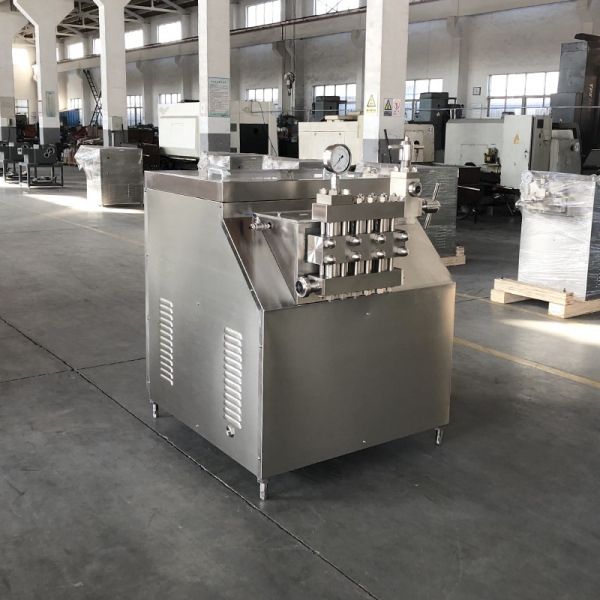
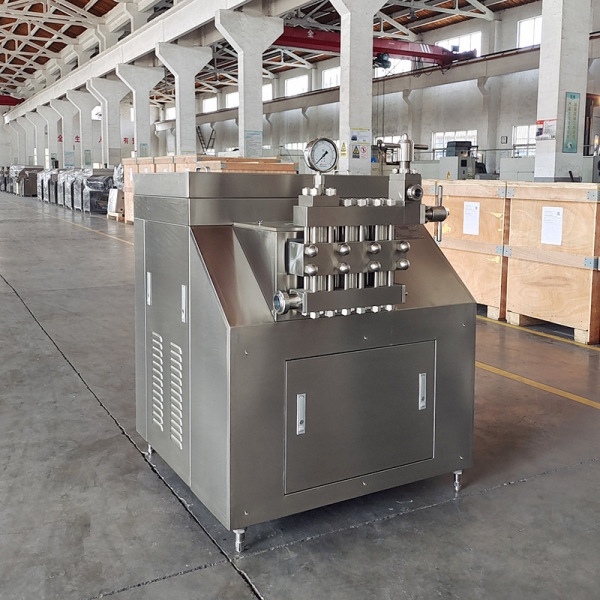
Use of Homogenizers in Paints, Coatings, and Pigment Dispersion
The paints and coatings industry relies heavily on achieving uniform particle distribution, consistent color, and long-term product stability. Whether producing decorative paints, industrial coatings, automotive finishes, or specialty pigments, manufacturers must ensure that solid particles are evenly dispersed throughout the formulation. High-pressure homogenizers have become an important processing solution, helping companies improve pigment dispersion, product quality, and production efficiency. One of the primary challenges in paint manufacturing is the dispersion of pigments. Pigment particles naturally tend to agglomerate or cluster together, creating uneven color distribution and inconsistent product performance. Poor dispersion can result in color variation, reduced gloss, sedimentation, and coating defects. Homogenization technology effectively breaks apart these particle clusters, ensuring a more uniform distribution throughout the formulation.
High-pressure homogenizers achieve this through a combination of shear forces, turbulence, and cavitation. As the paint or coating formulation passes through the homogenizing valve, intense mechanical energy breaks down pigment agglomerates into smaller and more evenly distributed particles. This process creates a stable suspension that improves both the appearance and performance of the final product. Uniform pigment dispersion directly impacts color quality. Finely dispersed pigments produce more vibrant and consistent colors because light is reflected evenly across the coated surface. Manufacturers can achieve greater color accuracy and batch-to-batch consistency, which is especially important in industries such as automotive coatings, architectural paints, and industrial finishing systems.
Homogenization also improves the stability of paint formulations. Without proper particle dispersion, pigments may settle during storage, leading to separation and the need for extensive remixing before use. High-pressure homogenization helps maintain uniform particle distribution, reducing sedimentation and extending product shelf life. This stability provides added convenience for both manufacturers and end users. In addition to color performance, particle size plays a major role in coating properties. Finely dispersed pigments contribute to improved surface smoothness, better gloss retention, and enhanced coating uniformity. Homogenization helps manufacturers create coatings with superior appearance and consistent application characteristics across a variety of substrates.
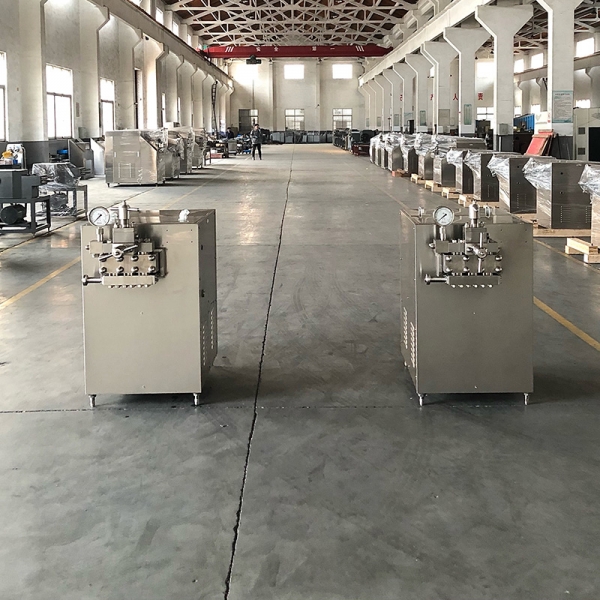
The technology is also valuable for specialty coatings that require advanced functionality. Products such as anti-corrosion coatings, UV-resistant finishes, conductive coatings, and protective industrial paints often contain complex additives that must be evenly distributed throughout the formulation. Homogenizers ensure that these functional materials remain properly dispersed, maximizing their effectiveness and performance. Production efficiency is another important advantage. Traditional dispersion methods may require extended processing times or multiple milling stages to achieve acceptable particle distribution. High-pressure homogenization can significantly reduce processing time while delivering more consistent results. This helps manufacturers increase throughput and improve overall production efficiency.
For water-based coatings, homogenization supports the growing demand for environmentally friendly products. As regulations encourage reduced solvent usage, manufacturers are developing advanced water-based formulations that require highly effective dispersion techniques. Homogenizers help achieve the fine particle distribution needed for stable, high-performance water-based coatings. Durability and product consistency are critical in industrial applications. Coatings used in construction, transportation, marine environments, and heavy industry must perform reliably under demanding conditions. Homogenization contributes to consistent formulation quality, helping coatings maintain their protective properties, appearance, and performance over time.
Modern high-pressure homogenizers also offer precise control over processing conditions. Manufacturers can adjust pressure levels and flow rates to optimize dispersion for different pigment types and coating formulations. This flexibility allows production teams to develop customized solutions for specific performance requirements and market demands. As coating technologies continue to advance, the importance of effective pigment dispersion will only increase. New materials, specialty additives, and performance-driven formulations require increasingly precise processing methods. High-pressure homogenization provides the control and efficiency needed to meet these evolving challenges. From decorative paints and industrial coatings to advanced functional materials, homogenizers play a vital role in modern coating production. By improving pigment dispersion, enhancing stability, and supporting efficient manufacturing, homogenization technology helps manufacturers produce high-quality paints and coatings that meet the performance expectations of today's global markets.