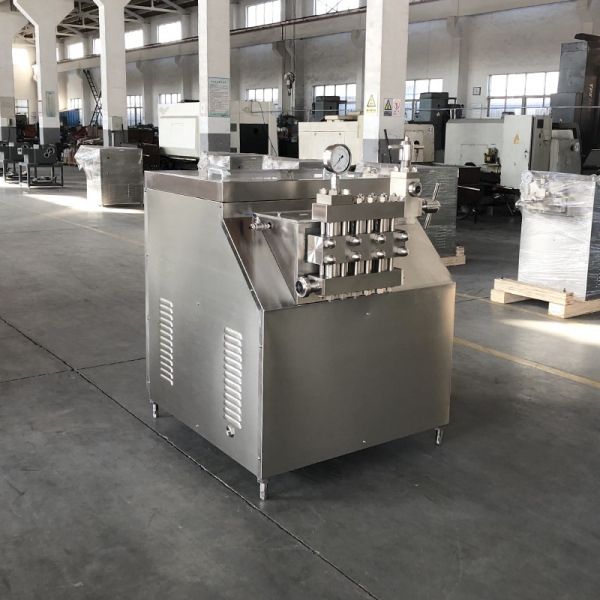
How Manufacturing Precision Determines Homogenizer Performance
High-pressure homogenizers operate under demanding conditions where pressure, flow, and mechanical forces must be carefully controlled. While the overall design of a homogenizer is important, the precision with which its components are manufactured can have an equally significant impact on performance. Small variations in dimensions, surface finish, alignment, or assembly accuracy can affect pressure stability, particle size reduction, energy efficiency, and equipment service life. The homogenizing valve is one of the clearest examples of why manufacturing precision matters. During operation, the product passes through an extremely narrow and carefully controlled gap. The dimensions and geometry of this gap directly influence flow velocity, pressure drop, turbulence, and shear forces. Precision machining ensures that the valve performs consistently and produces predictable homogenization results.
Pump components also require accurate manufacturing. Plungers, pump heads, and related components operate under high pressure and repeated mechanical loads. If their dimensions are not properly controlled, pressure fluctuations or uneven movement can occur. Precision-engineered components help maintain stable pressure throughout the processing cycle, supporting consistent product quality and reducing mechanical stress. Surface finish is another important consideration. Internal surfaces that come into contact with the product should be manufactured smoothly and accurately. Rough or uneven surfaces can encourage product accumulation, increase resistance to flow, and make cleaning more difficult. Proper surface finishing supports smoother product movement and helps maintain hygienic processing conditions.
Manufacturing precision also affects sealing performance. Seals and sealing surfaces must fit correctly to prevent leakage under high-pressure conditions. Even small dimensional errors can cause premature seal wear or pressure loss. Accurate machining and careful assembly help maintain effective sealing, reduce maintenance requirements, and improve equipment reliability. Another important benefit of precision manufacturing is consistent energy transfer. A homogenizer converts mechanical power into hydraulic pressure and ultimately into the forces required to reduce particle and droplet size. When components are accurately manufactured and correctly aligned, this energy can be transferred more efficiently. Poor alignment or dimensional inconsistencies can create unnecessary friction and energy losses.
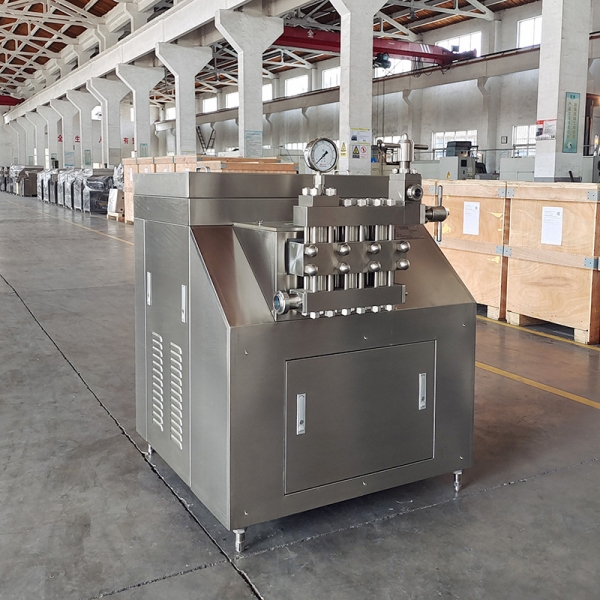
Precision is particularly important when manufacturers require repeatable particle size distribution. If the homogenizing valve operates differently from one cycle to another, the intensity of processing can vary. High manufacturing accuracy helps ensure that each batch experiences similar processing conditions, resulting in more predictable product characteristics. Material selection and manufacturing accuracy must also work together. Components exposed to high pressure and continuous wear need appropriate materials as well as precise machining. High-quality stainless steels, hardened alloys, ceramics, and other wear-resistant materials can provide durability, but their advantages can only be fully realized when components are manufactured and finished to the required tolerances.
Quality control throughout the manufacturing process is therefore essential. Professional homogenizer manufacturers use inspection procedures to verify component dimensions, surface quality, assembly accuracy, and operating performance. Testing critical components before equipment delivery helps identify potential problems and ensures that the finished homogenizer meets the required performance standards. Precision manufacturing also contributes to easier maintenance. When replacement components are produced according to accurate specifications, they can be installed correctly without extensive adjustment. Consistent component dimensions simplify servicing and help manufacturers restore equipment to its intended operating condition more quickly.
For applications such as pharmaceuticals, biologics, cosmetics, nano-materials, and advanced chemical formulations, precision becomes even more important. These industries may require tight control over particle size, formulation stability, and processing conditions. A precisely manufactured homogenizer provides the mechanical consistency needed to meet demanding application requirements. Ultimately, homogenizer performance is determined by much more than pressure ratings or motor power. The accuracy of valves, plungers, pump heads, seals, flow channels, and other components directly influences how reliably the machine performs. Changzhou Chaoli Homogenizer Factory, with its long-standing focus on homogenizer R&D and manufacturing, emphasizes careful production and quality control to support reliable homogenization performance.