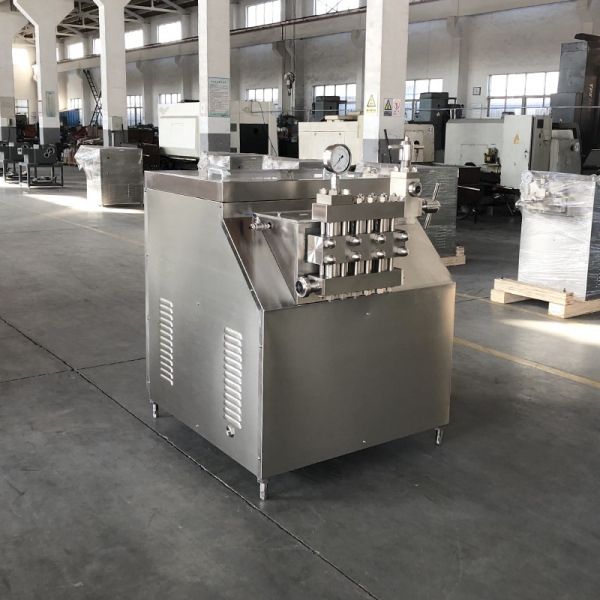
How to Future-Proof Your Production Line When Choosing a Homogenizer
Choosing an industrial homogenizer is a long-term investment that can influence production efficiency, product quality, and operating costs for many years. As industries such as food, beverages, pharmaceuticals, cosmetics, biologics, and nano-materials continue to develop, manufacturers need equipment that can adapt to changing requirements. Future-proofing a production line means selecting a homogenizer that can support today's applications while providing enough flexibility for tomorrow's products, capacity increases, and technology upgrades. The first step is to evaluate both current and expected production requirements. A homogenizer selected only according to today's output may become insufficient as demand increases. Manufacturers should consider future production volumes, potential new product lines, and possible changes in formulation. Choosing equipment with appropriate capacity reserves can provide room for expansion without requiring a complete replacement of the homogenization system.
Processing flexibility is another important consideration. Different products can have significant differences in viscosity, particle characteristics, temperature sensitivity, and required particle size. A future-ready homogenizer should be capable of handling a suitable range of formulations. This flexibility allows manufacturers to develop new products and enter additional markets without immediately investing in completely new processing equipment. Pressure and flow rate should also be evaluated carefully. The required operating conditions depend on the product and desired homogenization results. Selecting equipment with a suitable pressure range and stable flow performance gives manufacturers greater control over future process development. Instead of focusing only on maximum pressure, buyers should consider whether the machine can deliver consistent performance across different operating conditions.
Automation capability is becoming increasingly important in modern factories. A homogenizer that can integrate with automated production lines, sensors, programmable controls, and data monitoring systems provides greater potential for future upgrades. Digital control and monitoring can improve process consistency while making it easier to collect production data for quality management and optimization. Energy efficiency should be considered from a long-term perspective. The cost of operating a homogenizer extends far beyond its initial purchase price. Equipment with efficient hydraulic and mechanical designs can help reduce energy consumption during years of operation. Lower energy use can decrease production costs while supporting manufacturers' sustainability objectives.
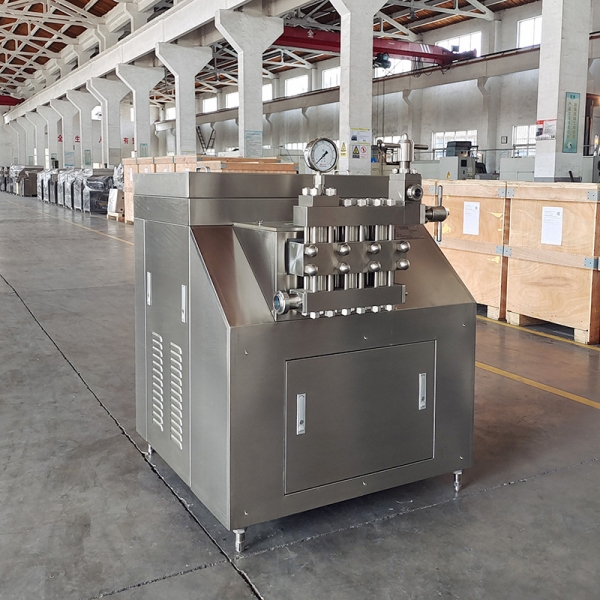
Maintenance and spare-parts availability are also essential when planning for long-term operation. Even durable homogenizers require periodic replacement of wear components such as valves, seals, and plungers. Buyers should ask about component availability, maintenance procedures, service intervals, and technical support. A machine that is easy to maintain can reduce downtime and provide greater value throughout its service life. Customization is another way to future-proof equipment. Production requirements may change as new formulations are introduced or manufacturing processes are upgraded. Working with a supplier capable of providing customized pressure configurations, valve arrangements, materials, automation functions, or other equipment features gives manufacturers greater flexibility to adapt their production systems.
Product quality and regulatory requirements should also influence equipment selection. Industries such as pharmaceuticals, food processing, and cosmetics often face strict requirements for consistency, hygiene, traceability, and process control. Selecting a homogenizer that can support appropriate quality management procedures helps manufacturers prepare for increasingly demanding production standards. The experience of the equipment manufacturer is equally important. A supplier with strong expertise in homogenization can help evaluate current processing requirements while considering future applications. Technical consultation, installation assistance, operator training, troubleshooting, and after-sales support can make a significant difference throughout the equipment's operating life.
Manufacturers should also consider the possibility of integrating the homogenizer with other production equipment. A well-designed system should communicate effectively with feeding, heating, cooling, storage, and filling equipment where required. Good integration reduces bottlenecks and makes future production-line expansion easier. Future-proofing does not necessarily mean purchasing the largest or most technologically advanced homogenizer available. Instead, it means selecting equipment with the right balance of capacity, flexibility, reliability, efficiency, and upgrade potential. Careful planning at the purchasing stage can prevent unnecessary replacement costs and production disruptions later.