Single-Stage vs. Two-Stage Homogenization: Which Process Delivers Better Results?
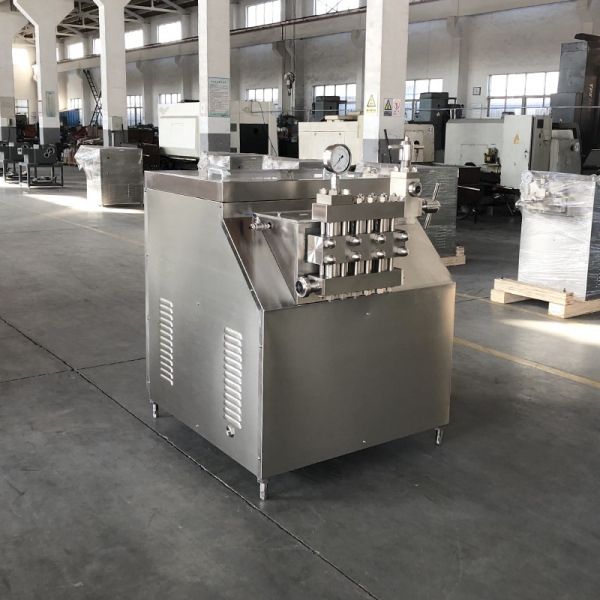
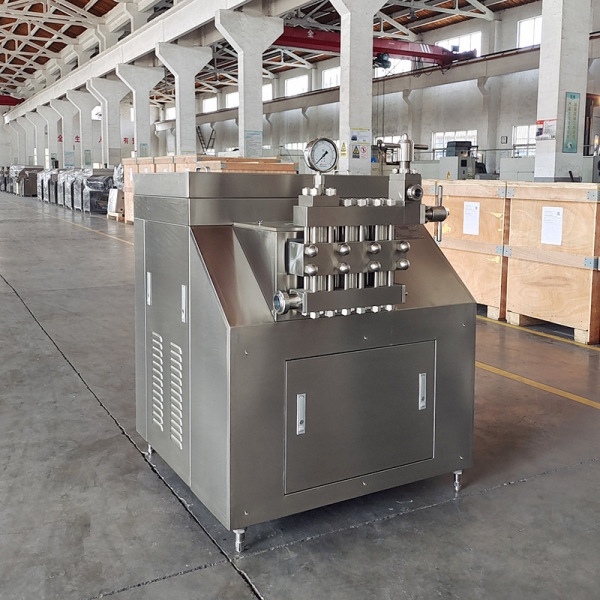
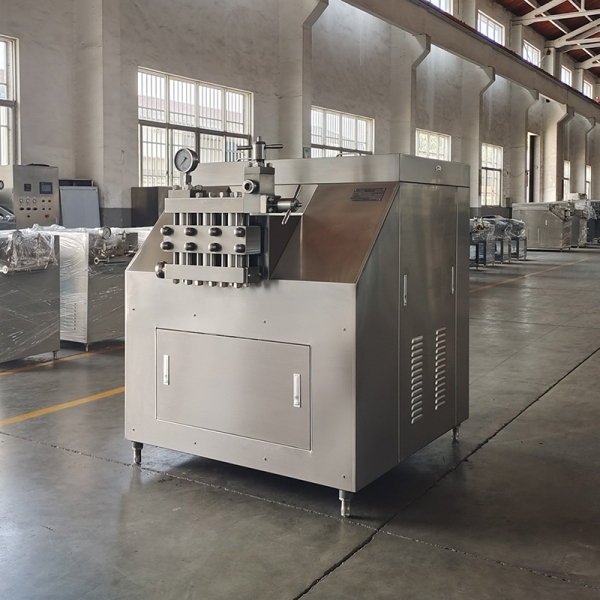
Homogenization is a critical process used across industries such as food and beverages, pharmaceuticals, cosmetics, biotechnology, and chemical manufacturing to improve product stability, texture, and consistency. When selecting a homogenization process, manufacturers often need to decide between single-stage and two-stage homogenization. Both methods have unique advantages, and the right choice depends on the product characteristics, desired particle size, production requirements, and application goals. Single-stage homogenization is the more common and straightforward approach. In this process, the product passes through one homogenizing valve under high pressure, where intense mechanical forces break down particles and droplets into smaller sizes. The combination of shear forces, turbulence, and cavitation creates a uniform dispersion, making single-stage homogenization suitable for many standard applications that require improved stability and consistency.
One of the main advantages of single-stage homogenization is its simplicity. With fewer processing steps and a simpler configuration, the equipment is easier to operate and maintain. This makes it an efficient choice for manufacturers producing products that do not require extremely fine particle control. Applications such as many dairy products, beverages, and general emulsions can often achieve excellent results using a single homogenization stage. Two-stage homogenization, on the other hand, uses two separate pressure stages to provide additional control over particle breakdown and stabilization. During the first stage, the product undergoes intensive homogenization at high pressure to reduce particle and droplet size. The second stage applies lower pressure to further process the product, helping prevent re-agglomeration and improving the overall stability of the final formulation.
The additional processing step in two-stage homogenization provides several advantages for challenging formulations. Products containing high levels of fat, complex emulsions, proteins, or sensitive ingredients may benefit from the improved stability that two-stage processing offers. The second stage helps maintain a more uniform particle distribution and reduces the possibility of particles combining again after the initial size reduction. In the food and beverage industry, the choice between single-stage and two-stage homogenization depends largely on product requirements. For example, simple liquid products may only require single-stage processing to achieve a smooth texture and stable appearance. However, products such as high-fat dairy beverages, nutritional drinks, and specialized emulsions may require two-stage homogenization to achieve better mouthfeel, improved shelf stability, and reduced separation.
Pharmaceutical and biotechnology applications often demand higher precision because particle size can directly affect product performance. Two-stage homogenization may provide advantages when producing complex suspensions, nano-emulsions, or biologic formulations where consistent particle distribution is essential. However, single-stage homogenization can still be effective for applications where processing requirements are less demanding. Energy consumption and operating costs are also important considerations. Single-stage homogenization generally requires less energy because the product passes through one processing step. It can provide excellent results while keeping operating expenses lower. Two-stage homogenization typically requires additional energy and equipment complexity, but the improved product quality may justify the increased investment for demanding applications.
Maintenance requirements should also be evaluated when selecting between the two processes. A single-stage system has fewer components and is generally easier to maintain. Two-stage systems require additional attention because of the second valve and related components. However, with proper maintenance and high-quality equipment design, both systems can provide reliable long-term operation. Another important factor is product development flexibility. Manufacturers producing a wide range of formulations may benefit from two-stage homogenization because it provides greater control over processing conditions. The ability to fine-tune pressure distribution between two stages allows companies to optimize performance for different products without changing the entire production system.
Ultimately, there is no universal answer to whether single-stage or two-stage homogenization delivers better results. Single-stage homogenization is an efficient and cost-effective solution for many standard applications, while two-stage homogenization provides enhanced control and stability for more complex formulations. The best choice depends on factors such as raw material properties, required particle size, production scale, and final product expectations. By carefully evaluating processing goals and consulting with an experienced homogenizer manufacturer, companies can select the most suitable technology for their production needs. Whether using a single-stage or two-stage system, the right homogenization approach helps manufacturers achieve consistent quality, improve efficiency, and create products that meet increasingly demanding market standards.