Using Homogenization to Improve the Dispersion of Active Cosmetic Ingredients
Active ingredients play an important role in modern cosmetic formulations, helping products deliver their intended functions while maintaining a pleasant texture and appearance. However, incorporating these ingredients into creams, lotions, serums, and other personal care products can be challenging. Some ingredients disperse poorly, form aggregates, or separate during storage. Homogenization offers manufacturers a practical way to improve ingredient distribution and develop more consistent cosmetic formulations. One of the main benefits of homogenization is its ability to reduce the size of dispersed droplets and certain particles. During high-pressure homogenization, a formulation passes through a specialized valve under controlled pressure, creating intense mechanical forces. These forces can break larger droplets into smaller ones and help distribute ingredients more evenly throughout the formulation. The actual results depend on the ingredient properties, formulation composition, and processing conditions.
Oil-soluble active ingredients are common in skincare products, including formulations containing certain vitamins, botanical oils, and lipid-based compounds. When these ingredients are incorporated into water-based systems, manufacturers often need to create a stable emulsion. High-pressure homogenization can reduce oil droplet size and improve dispersion, helping produce a more uniform appearance and potentially improving resistance to physical separation. The technology can also support the incorporation of selected botanical extracts and other poorly dispersed ingredients. Some extracts contain components that tend to aggregate or distribute unevenly in a liquid base. Appropriate homogenization may help break down larger agglomerates and improve the uniformity of the mixture. However, it cannot make every ingredient soluble, and the formulation may still require suitable solvents, emulsifiers, or other stabilizing agents.
Particle and droplet distribution can influence the texture of finished cosmetic products. Large or unevenly distributed droplets may contribute to a greasy feel, visible inconsistencies, or changes in appearance. A properly optimized homogenization process can help create a finer dispersion, supporting a smoother and more consistent texture. This is particularly valuable for products where sensory quality strongly influences consumer acceptance. Formulation stability is another important consideration. Cosmetic emulsions can experience creaming, coalescence, or phase separation during storage. Reducing droplet size may help slow some of these processes, depending on the formulation. Nevertheless, smaller droplets alone do not guarantee long-term stability. Emulsifier selection, viscosity, ingredient compatibility, storage temperature, and packaging conditions must also be evaluated.
Manufacturers should pay close attention to the sensitivity of active ingredients during processing. Certain vitamins, botanical compounds, peptides, and other functional ingredients may be affected by heat, oxygen exposure, or mechanical processing conditions. High-pressure homogenization can increase product temperature, so pressure settings and processing passes should be selected carefully. Temperature monitoring and appropriate cooling may help protect sensitive ingredients when necessary. The order in which ingredients are added can also affect the final result. Some formulations benefit from preparing a preliminary emulsion before high-pressure homogenization, while other ingredients may need to be introduced at a later stage to reduce unnecessary exposure to processing conditions. Laboratory trials can help determine the most suitable sequence, pressure, temperature, and number of passes for each formulation.
Quality testing is essential when developing a homogenization process for cosmetic products. Manufacturers can evaluate droplet or particle size distribution, viscosity, appearance, pH, and physical stability. Accelerated and real-time stability studies can provide additional information about how a formulation behaves during storage. Where active ingredient performance is important, suitable analytical methods should also be used to confirm that processing has not adversely affected the ingredient. Choosing the right equipment requires consideration of formulation viscosity, batch size, production capacity, required processing pressure, and ingredient sensitivity. A homogenizer designed for industrial production should also be compatible with the manufacturer's cleaning procedures and product-contact material requirements. Testing a formulation under representative conditions before full-scale production can reduce the risk of unexpected results during scale-up.
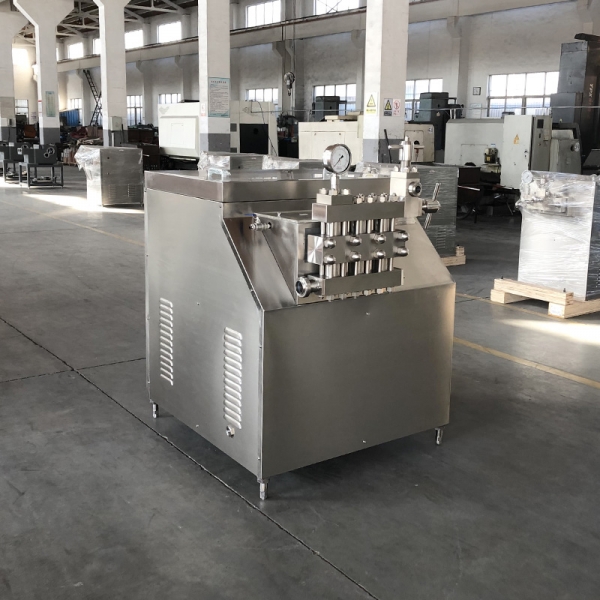
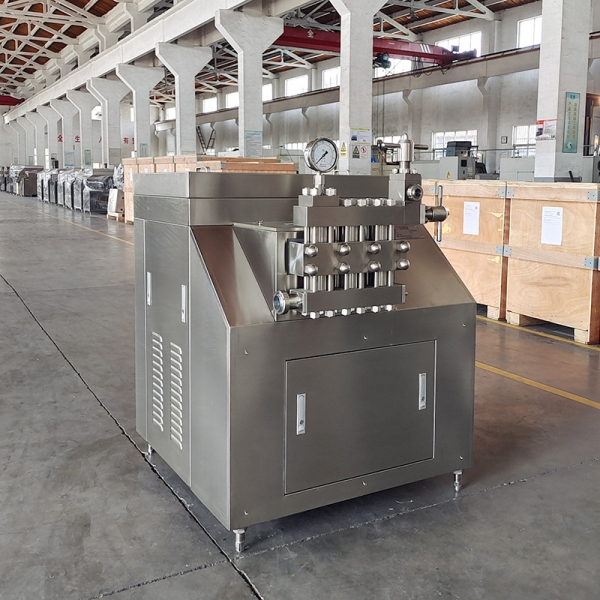
Changzhou Chaoli Homogenizer Factory, established in 1992, specializes in the development and manufacture of high-pressure homogenizers for various industrial applications, including food and cosmetics, pharmaceutical engineering, biologics, and nano materials. Its product range includes models 3011, 3015, 3030, 3045, 3090, and 4110. Manufacturers can evaluate equipment options according to their specific formulation characteristics and production requirements. Ultimately, homogenization can help cosmetic manufacturers improve the dispersion of suitable active ingredients, refine emulsion structure, and achieve more consistent product quality. The best results come from combining appropriate equipment with carefully selected processing parameters and effective formulation testing. By understanding how ingredients respond to pressure, temperature, and mechanical forces, manufacturers can develop cosmetic products that meet their desired standards for texture, uniformity, and stability.