How Homogenizers Support the Production of Functional Food Ingredients
Functional food ingredients are increasingly used to add nutritional value, improve product stability, or deliver specific health-related properties to food and beverage products. Ingredients such as proteins, vitamins, plant extracts, oils, fibers, and bioactive compounds often need to be dispersed evenly throughout a formulation. Homogenization provides manufacturers with an effective way to improve the uniformity and physical stability of these complex mixtures. One important benefit of homogenization is particle size reduction. High-pressure homogenizers force a product through a specialized homogenizing system under controlled pressure, creating intense mechanical forces that can break larger droplets or particles into smaller ones. Producing a finer and more uniform dispersion can help functional ingredients remain distributed throughout the finished product instead of rapidly separating or settling.
Many functional food formulations contain ingredients with different physical properties. For example, an oil-based nutrient may need to be incorporated into a water-based beverage. Simply mixing these materials may produce an unstable formulation. Homogenization can help reduce the size of the dispersed oil phase and create a more consistent emulsion, making it easier to formulate products containing lipid-based functional ingredients. Protein ingredients can also benefit from controlled homogenization. Plant proteins, dairy proteins, and other protein-based ingredients may create challenges related to dispersion, texture, and sedimentation. Homogenization can improve the uniform distribution of these components within a liquid system, helping manufacturers achieve a more consistent formulation from one production batch to another.
The technology is also useful for functional beverages containing multiple nutritional components. Products such as protein drinks, fortified beverages, nutritional beverages, and plant-based drinks may contain ingredients that behave differently during processing and storage. A suitable homogenization process can help create a more uniform liquid structure and reduce physical separation during the product's intended shelf life. Another consideration is the dispersion of botanical extracts and other active food ingredients. Some extracts may have limited solubility or a tendency to form aggregates in liquid formulations. Homogenization can improve dispersion by reducing larger agglomerates and distributing the ingredient more evenly throughout the product. The exact processing conditions, however, should be selected according to the sensitivity and characteristics of the ingredient.

Homogenization can also influence the texture and mouthfeel of functional foods. Large particles and unstable droplets can create a rough or inconsistent sensory experience. By producing a finer dispersion, homogenization may contribute to a smoother texture in suitable formulations. This can be particularly useful when developing beverages and liquid nutritional products where consistency is an important part of consumer acceptance. Process consistency is another major advantage for manufacturers. Functional food products often require accurate and repeatable ingredient distribution. Variations in mixing or dispersion can lead to differences between batches. A controlled high-pressure homogenization process provides manufacturers with defined operating parameters, helping create more repeatable physical characteristics when the formulation and processing conditions remain consistent.
However, more homogenization is not necessarily better. Excessive pressure, unsuitable temperatures, or inappropriate processing conditions may negatively affect certain sensitive ingredients. Functional compounds can have different stability characteristics, so manufacturers should evaluate pressure, temperature, residence time, and the number of processing passes rather than applying the same settings to every formulation. Equipment selection should therefore be based on the complete production requirement. Flow rate, required pressure, product viscosity, particle characteristics, formulation sensitivity, and desired output all need to be considered. A laboratory or pilot evaluation can also help manufacturers determine suitable processing conditions before transferring a formulation to large-scale production.
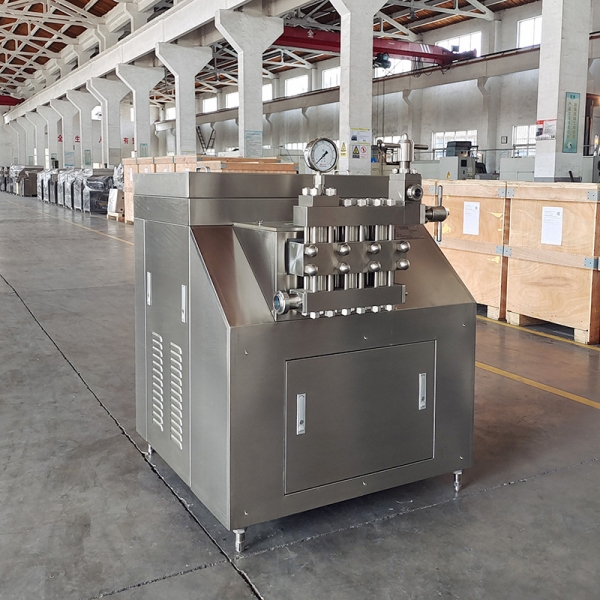
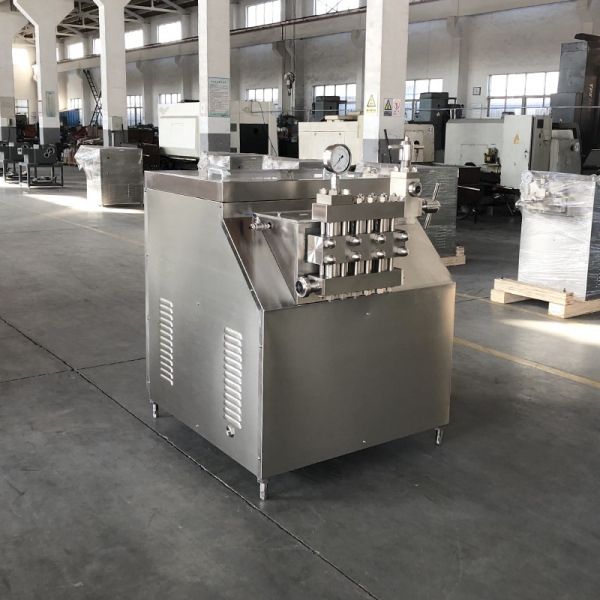
High-pressure homogenizers are used across food, cosmetics, pharmaceutical engineering, biologics, and nano-material applications. Changzhou Chaoli Homogenizer Factory, established in 1992, develops and manufactures homogenization equipment for different industrial processing requirements. Its product range includes models such as the 3011, 3015, 3030, 3045, 3090, and 4110, giving manufacturers different equipment options according to production scale and application needs. As functional foods continue to incorporate more complex combinations of nutritional and bioactive ingredients, reliable dispersion and formulation stability become increasingly important. Homogenization offers manufacturers a practical processing tool for improving uniformity, controlling dispersed particle or droplet size, and supporting consistent product quality. When the equipment and processing parameters are matched carefully to the formulation, high-pressure homogenization can become an important part of producing stable and consistent functional food ingredients and finished products.