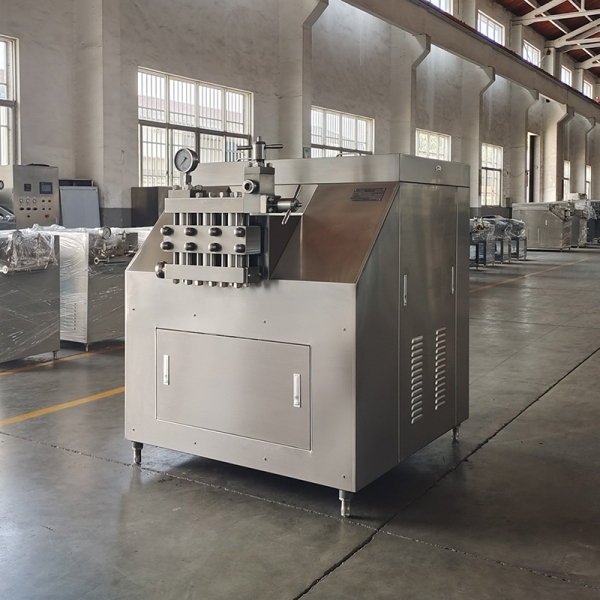
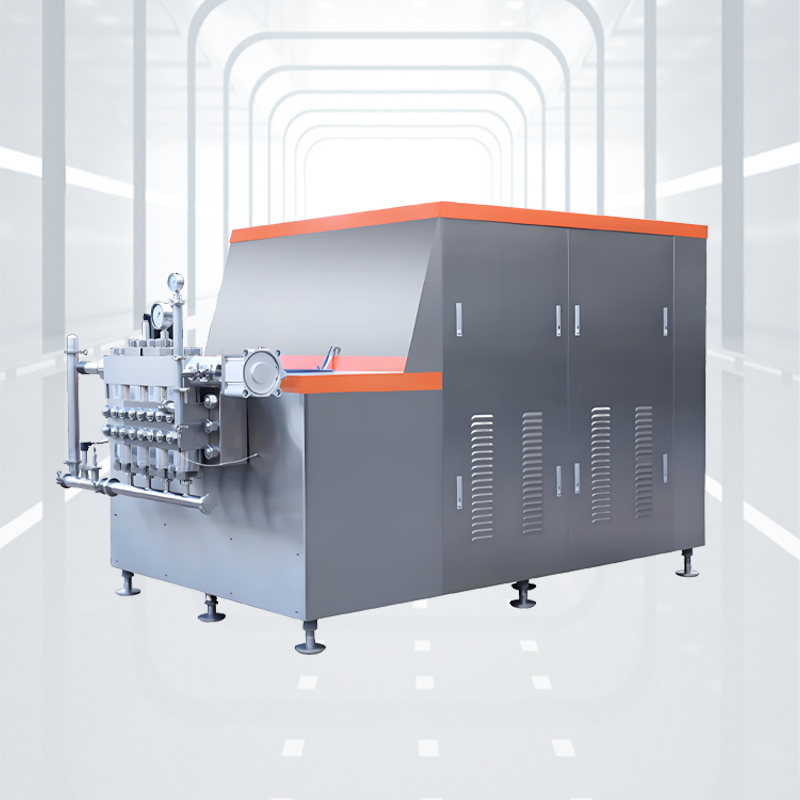
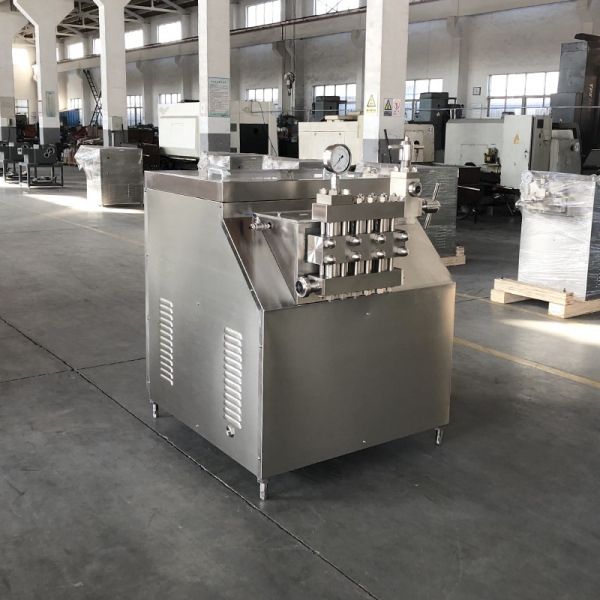
How Homogenizing Valve Design Affects Processing Performance
The homogenizing valve is the core component of every high-pressure homogenizer. While pumps generate the pressure required for processing, it is the valve that converts this pressure into the mechanical forces responsible for particle size reduction, emulsification, and dispersion. The design of the homogenizing valve has a direct impact on processing efficiency, product quality, energy consumption, and equipment reliability. Understanding its role helps manufacturers select the right homogenizer for their specific production requirements. During homogenization, the product is forced through a very narrow gap within the homogenizing valve at extremely high pressure. As the liquid passes through this restricted opening, its velocity increases dramatically while pressure drops rapidly. This generates powerful shear forces, turbulence, and cavitation, which work together to break down particles and droplets into much smaller and more uniform sizes.
The geometry of the valve plays a critical role in determining how efficiently these mechanical forces are generated. The shape of the valve seat, impact ring, and flow channel influences the movement of the liquid through the valve. A well-designed valve creates controlled and uniform energy distribution, ensuring that particles receive consistent treatment throughout the homogenization process. Particle size reduction depends heavily on valve performance. An optimized valve design allows larger particles and droplets to be broken down efficiently while producing a narrow particle size distribution. Uniform particle sizes improve product stability, texture, appearance, and shelf life across applications such as dairy products, beverages, pharmaceuticals, cosmetics, and nano-materials.
Valve design also affects emulsion stability. In products containing oil and water phases, the homogenizing valve must generate sufficient energy to create fine droplets that remain evenly dispersed. Proper valve geometry reduces the likelihood of droplet coalescence, helping manufacturers produce emulsions that resist separation during storage and maintain consistent product quality. Flow consistency is another important factor influenced by valve design. Poorly designed valves may create uneven flow patterns or dead zones where processing efficiency decreases. Modern precision-engineered valves promote smooth and stable product flow, ensuring that every portion of the product receives the same homogenization treatment and reducing batch-to-batch variation.
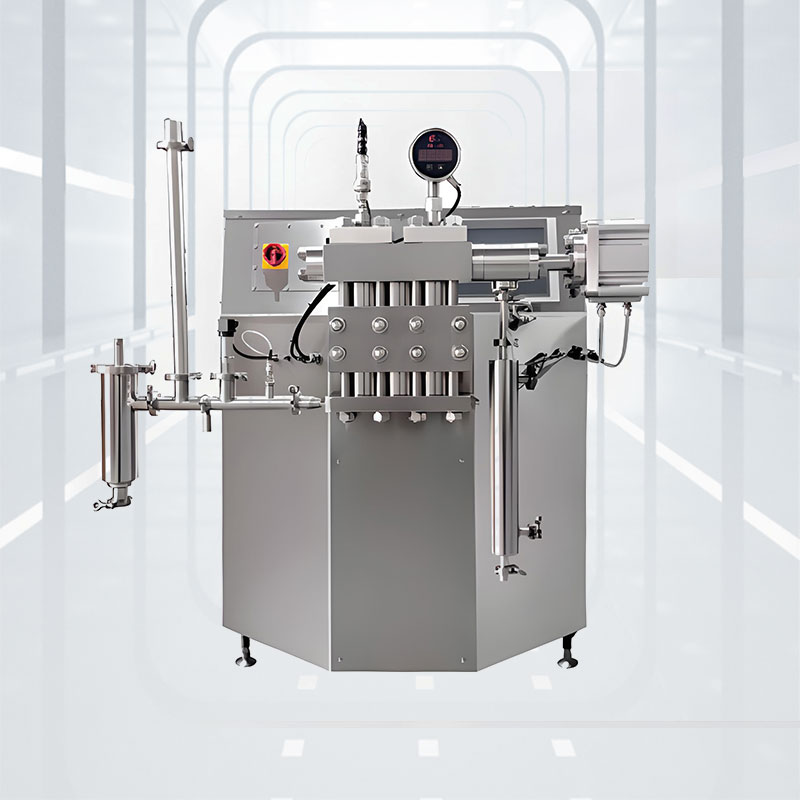
Energy efficiency is closely related to valve performance. A highly efficient valve converts hydraulic energy into homogenization energy with minimal losses. This allows manufacturers to achieve the desired particle size at lower operating pressures, reducing energy consumption while maintaining excellent processing performance. Efficient valve design contributes to lower production costs over the equipment's lifetime. Different products often require different valve configurations. Low-viscosity liquids, highly viscous formulations, pharmaceutical suspensions, cosmetic emulsions, and biological materials each respond differently during homogenization. Some homogenizers offer interchangeable or adjustable valve designs, allowing manufacturers to optimize processing conditions for various products without replacing the entire machine.
Durability is another important consideration. Homogenizing valves operate under extremely high pressure and are exposed to continuous mechanical stress. High-quality valves are manufactured from wear-resistant materials that maintain dimensional accuracy even after extended operation. Durable valve components reduce maintenance frequency, extend equipment service life, and help maintain stable processing performance over time. Proper maintenance is essential for preserving valve efficiency. Wear on the valve seat, impact ring, or sealing surfaces can gradually reduce homogenization effectiveness and cause pressure fluctuations. Regular inspection, cleaning, and timely replacement of worn components help ensure that the valve continues to deliver consistent particle size reduction and stable production performance.
Recent advances in homogenization technology have led to significant improvements in valve design. Precision machining, advanced computational fluid dynamics, and improved material technologies allow manufacturers to develop valves with enhanced flow characteristics, greater wear resistance, and improved processing efficiency. These innovations support higher productivity while reducing operating costs. The homogenizing valve is far more than a simple mechanical component—it is the heart of the homogenization process. Its design directly influences particle size reduction, emulsion stability, flow consistency, energy efficiency, and equipment reliability. By selecting a homogenizer with a well-engineered valve system and maintaining it properly, manufacturers can achieve superior product quality, maximize production efficiency, and ensure long-term operational success across a wide range of industrial applications.